
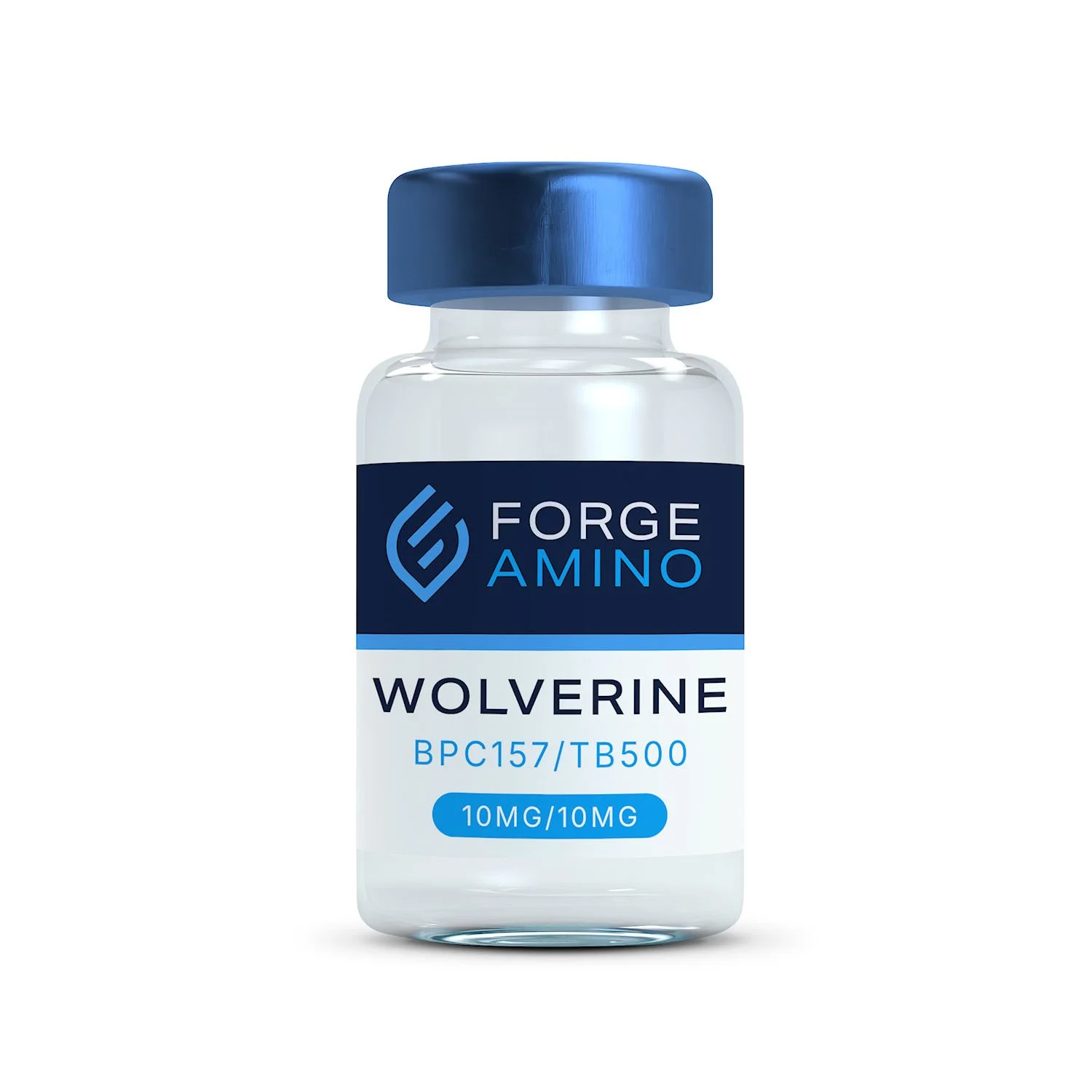
$70.00
BPC-157 10MG
This research only product is supplied in a 3ml vial containing 10mg of BPC-157 (10mg) as a lyophilized powder. Every compound undergoes stringent independent 3rd party testing in a US laboratory with verified 99%+ purity and QR link to the COA stamped on the vial.
Description
BPC-157, a synthetic pentadecapeptide derived from human gastric juice, promotes healing through multiple interconnected mechanisms, primarily by stimulating angiogenesis, modulating nitric oxide pathways, enhancing growth factor signaling, and upregulating genes involved in tissue repair and anti-inflammation
Mechanisms of Action
BPC-157 acts via several molecular pathways to improve blood flow, reduce inflammation, and accelerate cellular repair across tissues like tendons, ligaments, muscles, gut, and the central nervous system:
· Angiogenesis and Vascular Effects: BPC-157 binds to VEGFR2 receptors on endothelial cells, triggering phosphorylation and activation of the Akt-eNOS pathway, which boosts nitric oxide (NO) production. This dilates blood vessels, enhances circulation, oxygen delivery, and new blood vessel formation to injured areas. It also activates the Src-Caveolin-1-eNOS pathway for sustained NO production and vascular stability.
· Nitric Oxide Modulation: By upregulating Nos3 (eNOS) and Nos1 while suppressing Nos2 (iNOS), BPC-157 improves endothelial function, counteracts ischemia/reperfusion injury, and promotes reperfusion in damaged tissues.
· Growth Hormone and Cellular Signaling: BPC-157 increases growth hormone receptor expression in tendon fibroblasts (dose- and time-dependently), potentiating cell proliferation via JAK-2 activation. It also activates FAK-paxillin complexes for cell migration and adhesion during wound healing.
· Gene Expression and Repair: Upregulates genes like Egr1 and Vegfr2 for vascularization, balances gene modulation to speed cellular regeneration, and supports anti-inflammatory effects.
· Antioxidant and Protective Roles: Its structure (with four carboxylic groups) enables reactive oxygen species scavenging, maintaining vascular integrity and reversing injurious cycles in conditions like spinal cord injury.
Tissue-Specific Effects
These pathways contribute to healing in:
· Musculoskeletal: Joints, ligaments, tendons, muscles, and fractures via upregulated cell growth, proliferation, survival, and angiogenesis.
· Gut and CNS: Cytoprotection, mucosal integrity, and recovery from reperfusion disturbances
Technical Data
Form: Lyophylized powder
Molecular Formula: C₆₂H₉₈N₁₆O₂₂
Storage: Protect from light and moisture, keep tightly sealed, refrigerate reconstituted solution